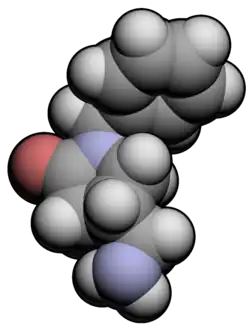
Nebracetam is an investigational drug of the racetam family that is a M1 acetylcholine receptor agonist in rats.[1] Based on a human leukemic T cell experiment in 1991, it is believed to act as an agonist for human M1-muscarinic receptors.[2] It is also believed to act as a nootropic, like many other racetam drugs.[3] A chemoenzymatic method of synthesis was reported in 2008.[4] As of 2023, human trials have not yet been conducted.
See also
References
- ^ Takeo S, Hayashi H, Miyake K, Takagi K, Tadokoro M, Takagi N, et al. (June 1997). "Effects of delayed treatment with nebracetam on neurotransmitters in brain regions after microsphere embolism in rats". British Journal of Pharmacology. 121 (3): 477–484. doi:10.1038/sj.bjp.0701161. PMC 1564714. PMID 9179389.
- ^ Kitamura Y, Kaneda T, Nomura Y (January 1991). "Effects of nebracetam (WEB 1881 FU), a novel nootropic, as a M1-muscarinic agonist". Japanese Journal of Pharmacology. 55 (1): 177–180. doi:10.1254/jjp.55.177. PMID 2041225.
- ^ Gabryel B, Pudełko A, Trzeciak HI, Cieślik P (2000). "Effect of nebracetam on content of high-energy phosphates and morphometry of rat astrocytes in vitro. Comparison with piracetam". Acta Poloniae Pharmaceutica. 57 (4): 289–298. PMID 11126618.
- ^ Yamashita S, Mase N, Takabe K (2008-09-22). "Chemoenzymatic total synthesis and determination of the absolute configuration of (S)-nebracetam". Tetrahedron: Asymmetry. 19 (18): 2115–2118. doi:10.1016/j.tetasy.2008.09.004. ISSN 0957-4166.
|
|---|
| mAChRsTooltip Muscarinic acetylcholine receptors | | Agonists | |
|---|
| Antagonists |
- 3-Quinuclidinyl benzilate
- 4-DAMP
- Aclidinium bromide (+formoterol)
- Abediterol
- AF-DX 250
- AF-DX 384
- Ambutonium bromide
- Anisodamine
- Anisodine
- Antihistamines (first-generation) (e.g., brompheniramine, buclizine, captodiame, chlorphenamine (chlorpheniramine), cinnarizine, clemastine, cyproheptadine, dimenhydrinate, dimetindene, diphenhydramine, doxylamine, meclizine, mequitazine, perlapine, phenindamine, pheniramine, phenyltoloxamine, promethazine, propiomazine, triprolidine)
- AQ-RA 741
- Atropine
- Atropine methonitrate
- Atypical antipsychotics (e.g., clozapine, fluperlapine, olanzapine (+fluoxetine), rilapine, quetiapine, tenilapine, zotepine)
- Benactyzine
- Benzatropine (benztropine)
- Benzilone
- Benzilylcholine mustard
- Benzydamine
- Bevonium
- BIBN 99
- Biperiden
- Bornaprine
- Camylofin
- CAR-226,086
- CAR-301,060
- CAR-302,196
- CAR-302,282
- CAR-302,368
- CAR-302,537
- CAR-302,668
- Caramiphen
- Cimetropium bromide
- Clidinium bromide
- Cloperastine
- CS-27349
- Cyclobenzaprine
- Cyclopentolate
- Darifenacin
- DAU-5884
- Desfesoterodine
- Dexetimide
- DIBD
- Dicycloverine (dicyclomine)
- Dihexyverine
- Difemerine
- Diphemanil metilsulfate
- Ditran
- Drofenine
- EA-3167
- EA-3443
- EA-3580
- EA-3834
- Emepronium bromide
- Etanautine
- Etybenzatropine (ethybenztropine)
- Fenpiverinium
- Fentonium bromide
- Fesoterodine
- Flavoxate
- Glycopyrronium bromide (+beclometasone/formoterol, +indacaterol, +neostigmine)
- Hexahydrodifenidol
- Hexahydrosiladifenidol
- Hexbutinol
- Hexocyclium
- Himbacine
- HL-031,120
- Homatropine
- Imidafenacin
- Ipratropium bromide (+salbutamol)
- Isopropamide
- J-104,129
- Hyoscyamine
- Mamba toxin 3
- Mamba toxin 7
- Mazaticol
- Mebeverine
- Meladrazine
- Mepenzolate
- Methantheline
- Methoctramine
- Methylatropine
- Methylhomatropine
- Methylscopolamine
- Metixene
- Muscarinic toxin 7
- N-Ethyl-3-piperidyl benzilate
- N-Methyl-3-piperidyl benzilate
- Nefopam
- Octatropine methylbromide (anisotropine methylbromide)
- Orphenadrine
- Otenzepad (AF-DX 116)
- Otilonium bromide
- Oxapium iodide
- Oxitropium bromide
- Oxybutynin
- Oxyphencyclimine
- Oxyphenonium bromide
- PBID
- PD-102,807
- PD-0298029
- Penthienate
- Pethidine
- pFHHSiD
- Phenglutarimide
- Phenyltoloxamine
- Pipenzolate bromide
- Piperidolate
- Pirenzepine
- Piroheptine
- Pizotifen
- Poldine
- Pridinol
- Prifinium bromide
- Procyclidine
- Profenamine (ethopropazine)
- Propantheline bromide
- Propiverine
- Quinidine
- 3-Quinuclidinyl thiochromane-4-carboxylate
- Revefenacin
- Rociverine
- RU-47,213
- SCH-57,790
- SCH-72,788
- SCH-217,443
- Scopolamine (hyoscine)
- Scopolamine butylbromide (hyoscine butylbromide)
- Silahexacyclium
- Sofpironium bromide
- Solifenacin
- SSRIsTooltip Selective serotonin reuptake inhibitors (e.g., femoxetine, paroxetine)
- Telenzepine
- Terodiline
- Tetracyclic antidepressants (e.g., amoxapine, maprotiline, mianserin, mirtazapine)
- Tiemonium iodide
- Timepidium bromide
- Tiotropium bromide
- Tiquizium bromide
- Tofenacin
- Tolterodine
- Tricyclic antidepressants (e.g., amitriptyline (+perphenazine), amitriptylinoxide, butriptyline, cidoxepin, clomipramine, desipramine, desmethyldesipramine, dibenzepin, dosulepin (dothiepin), doxepin, imipramine, lofepramine, nitroxazepine, northiaden (desmethyldosulepin), nortriptyline, protriptyline, quinupramine, trimipramine)
- Tridihexethyl
- Trihexyphenidyl
- Trimebutine
- Tripitamine (tripitramine)
- Tropacine
- Tropatepine
- Tropicamide
- Tropine benzilate
- Trospium chloride
- Typical antipsychotics (e.g., chlorpromazine, chlorprothixene, cyamemazine (cyamepromazine), loxapine, mesoridazine, thioridazine)
- Umeclidinium bromide (+vilanterol)
- WIN-2299
- Xanomeline
- Zamifenacin
|
|---|
|
|---|
Precursors
(and prodrugs) | |
|---|
- See also
- Receptor/signaling modulators
- Nicotinic acetylcholine receptor modulators
- Acetylcholine metabolism/transport modulators
|


 (what is this?) (verify)