2

This seems like a question which has been asked multiple times on forums. I researched the problem but I still was unable to figure out the answer which I can at least intuitively understand. So in this simple circuit why is there no current leakage to earth? Assume that it is a true earth ground connection (a rod in the earth for example).

Update: I am giving researched answers below, but not as the only options. I am not satisfied with any of them, and give my explanation as to why. So I am hoping for either an elaboration or an alternative answer.
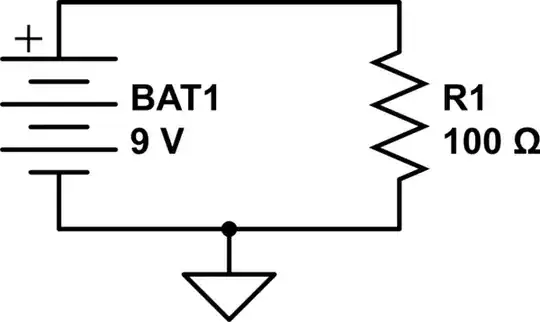
schematic

simulate this circuit – Schematic created using CircuitLab

The answers I have found:-

  1. Here With only one connection to ground there is no circuit for the current to flow through. It can't flow "to" ground, because there is nowhere for it to flow to. There's no difference between ground and a wire dangling in the breeze. However for current to flow there must be potential difference. And because the ground and the battery return has the same potential - why would current prefer to flow specifically to the return point. Especially taken into account that earth can absorb all electrons generated by the battery (on contrary for example to just piece of wire).

  2. Here The ground isn't a great conductor and while it is in parallel with the service, the amount of current returning through the ground is so small it is effectively zero - Firstly this answer implies that there's some leakage occurs which just depends on earth resistance. Also I do not understand which resistance is taken into account. Where it is measured? I think also the answer relates to the several connection of the circuit to the ground.

So anyone can give real physical explanation of this?

KalleMP
  • 4,079
  • 1
  • 14
  • 32
Boris
  • 177
  • 1
  • 6
  • If there is a potential difference, it is equalized instantly after the connection. So yeah, there would be an instantaneous current. 2) I think it is not an answer.
  • – Eugene Sh. Oct 12 '17 at 18:36
  • @EugeneSh. The question why would it stop then. The current flow can take either path to the ground or to the return.Both with the same potential. Why the second one is preferred? – Boris Oct 12 '17 at 18:38
  • 1
  • is an is more applicable to the AC mains situation where there can be some leakage and/or capacitive coupling to ground causing small (AC!) currents to flow. But your example is DC so 2) simply does not apply.
  • – Bimpelrekkie Oct 12 '17 at 18:38
  • @Bimpelrekkie So what is the correct answer? – Boris Oct 12 '17 at 18:39
  • I say that 2 does not apply so..... – Bimpelrekkie Oct 12 '17 at 18:40
  • Ground and return are the same point. – Eugene Sh. Oct 12 '17 at 18:40
  • @EugeneSh. If they are the same why current does not flow to the ground. – Boris Oct 12 '17 at 18:41
  • 2
    Let's turn that around, why would the current flow into the ground? What would happen if it did? How would you make that current flow into ground? Would there be a stream of electrons going from the circuit into the ground? Is that sustainable? – Bimpelrekkie Oct 12 '17 at 18:41
  • @Bimpelrekkie It will just flow there. Partially (half of the current) to the return to keep the battery working and partially (another half) to the ground. – Boris Oct 12 '17 at 18:43
  • The current will flow only between points having a potential difference. In order to maintain a potential difference over time you need a closed circuit. If you have a potential difference in open circuit, it will get equalized after short time. That's it. The path to ground is open. the path to battery is closed. – Eugene Sh. Oct 12 '17 at 18:44
  • @EugeneSh. Electron reaching the ground connection does not know which direction the circuit is closed or open. It flows to the lowest potentials. Both paths have the same potential. – Boris Oct 12 '17 at 18:46
  • It will just flow there. Partially (half of the current) to the return to keep the battery working and partially (another half) to the ground. That is really not true. Current flows in loops and cannot split halfway to somewhere else without returning. – Bimpelrekkie Oct 12 '17 at 18:47
  • But if the electron chooses ground then the ground gets negatively charged making it harder for the electron to go there. So it will not. – Bimpelrekkie Oct 12 '17 at 18:48
  • @Boris Yes. Now consider the electron is "choosing" the wrong path and going to the ground. Now the potential of ground have changed! So the next electron will go the other way, until the potentials are equal again. – Eugene Sh. Oct 12 '17 at 18:49
  • @Bimpelrekkie The whole idea of the ground is that it cannot become charged. – Boris Oct 12 '17 at 18:49
  • @Boris It's relative. So it's the circuit is getting "uncharged" (or "discharged?) if you like – Eugene Sh. Oct 12 '17 at 18:49
  • The whole idea of the ground is that it cannot become charged Nonsense, if I charge a metal object the ground gets discharged. The total sum of charge must remain constant. – Bimpelrekkie Oct 12 '17 at 18:50
  • @Bimpelrekkie https://en.wikipedia.org/wiki/Ground_(electricity) a "ground" is usually idealized as an infinite source or sink for charge, which can absorb an unlimited amount of current without changing its potential – Boris Oct 12 '17 at 18:52
  • current without changing its potential That is correct and I'm correct as well, why is that? Because the earth is much much larger than my object so on the whole earth the charge displacement makes little difference but it does on my small object. – Bimpelrekkie Oct 12 '17 at 18:53
  • Anyway. Let's go back to our favorite water-and-pipes analogy. Consider battery as a pump and the ground as a reservoir with a very high(or low, or whatever) water pressure. will connecting the closed pipe/pump circuit cause any water flow to/from that reservoir? – Eugene Sh. Oct 12 '17 at 18:54
  • which can absorb an unlimited amount of current without changing its potential And where does this charge come from? Is it made somewhere? Nope, charge is an electron taken away from it's atom or an Atom from which an electron has been taken away (Ion). – Bimpelrekkie Oct 12 '17 at 18:55
  • What specifically don't you understand? My answer assumes you have the circuit as drawn. The one from @Trevor recognises that in the real world there are parasitic components that are not shown on the circuit diagram. Both are correct if you take them in the sense intended. Please explain where you need further clarification. – Warren Hill Oct 12 '17 at 19:49
  • @Boris You are right. There is a leakage of electrons flowing out of your circuit due to the random movement of electrons; however, this is being cancelled by the same number of electrons flowing into your circuit as well. There is no current because there is no net flow of electrons due to the earth and the negative battery terminal being at the same voltage potential. – jstarr Oct 12 '17 at 20:00
  • @jstarr why would electrons return? There's an EMF pushing charges down the wire from + to -. The questions is why it is pushing it to the return and not to the ground. Both paths are at the same potential – Boris Oct 12 '17 at 20:06
  • 1
    @Boris, no they are not at the same potential, and even if they were, the bottom of the battery is negative with respect to the top and the electrons move around the circuit from the bottom to the top. No extra electrons are added or removed from the circuit, as would be the case if something crossed the ground connection. – Trevor_G Oct 12 '17 at 20:38
  • Must be a lot of bent pennies in here.. none of them seem to be dropping.. That tells me the OP has some basic concept wrong in his head that wont be answered till we know what it is. – Trevor_G Oct 12 '17 at 21:08
  • The question "2" is about when you have two ground connections. – user253751 Oct 13 '17 at 01:01