7

See this page.

enter image description here

Is this OK? I know that Pb-based solder is extremely creep-sensitive, so you don't want any force exerted on solder connections. That's why heavy components (think transformers or components mounted on a heat sink) should always have a mechanical fixing (screws) apart from the solder connections.

So for me it's a no-no. What do you think? Do other solders show less creep?

edit (re Fake's comment on snap-in)

The snap-ins seem to be hooked pins which hold the bar in place (during soldering), as there are also soldering pins:
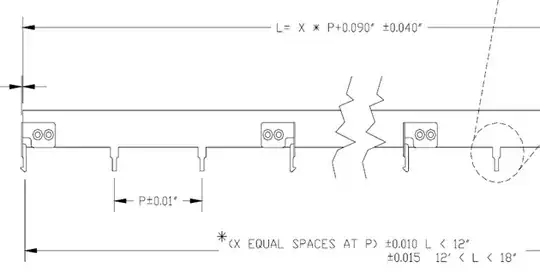
enter image description here

stevenvh
  • 145,832
  • 21
  • 457
  • 668
  • 1
    If the PCB is so long that it will bend it should have screws halfway its length too, on top of the screws on the corners. – Federico Russo Apr 13 '12 at 10:36
  • I personally wouldn't use them, and haven't had to need them. Anytime I need the extra support I just put more standoffs and screws on the PCB. The screws/standoffs will be more robust than these stiffeners anyway. –  Apr 13 '12 at 14:56
  • 1
    If some other solder doesn't creep, its probably more brittle than Pb-Sn, so its more likely to fracture instead. Which is probably even worse. – The Photon Apr 13 '12 at 15:51
  • now it's a moot point as CCI has gone belly up. Sad. – Jason S Oct 28 '13 at 00:48

4 Answers4

3

When they're designed as board-stiffeners, sure. They're no problem.

On the page:

We offer single and multi-layer copper bus bars both insulated and un-insulated. The snap-in rigid/bus stiffeners provide board rigidity without the need to clinch pins.

Critical section highlighted.

They're not relying on the solder for mechanical support. The pins are shaped so they lock into the PCB.


It's worth noting that they also bill them as helping in high-vibration environments.

While I do agree that if you can, you should have more screw-mounting points for a PCB, I think Board-Stiffeners are more intended for situations where you are designing a system to fit into pre-existing packaging, and adding additional PCB supports is not an option.

If your choices are "sagging PCB" and "PCB with stiffener", it's pretty obvious what the better answer is.

The answer is to fire your mechanical engineer

Connor Wolf
  • 32,168
  • 6
  • 79
  • 138
  • I read the "snap-in", but they also talk about RoHS-compliant, which suggests soldering. – stevenvh Apr 13 '12 at 11:20
  • 1
    Why do you think RoHS refers to soldering only? – Stefan Paul Noack Apr 13 '12 at 11:24
  • Yeah - it just means lead-free pretty much. It's odd to have to say that a plastic piece is lead-free, but some compliance departments will put their heads in the sand until they see the logo. Further, if soldering WAS involved, they're not supplying the solder (which would be the part with lead in it), so that wouldn't account for it. – AngryEE Apr 13 '12 at 12:01
  • @noah1989 - I didn't say it means soldering, only that it suggest it, given the application. Sure, you can also label wooden toys RoHS. – stevenvh Apr 13 '12 at 12:01
  • @Fake - updated my question about the snap-ins. – stevenvh Apr 13 '12 at 13:35
  • 1
    I don't see how soldering would remove the effectiveness of the snap-pins. – Connor Wolf Apr 14 '12 at 05:07
  • The way I see it, it has two uses. You can use it as a buss-bar (with the solder-pins, or use it as a PCB-stiffener. As a buss-bar, you have to be careful to not stress the solder joints. As a stiffener, you don't care about solder creepage. Besides, creepage is only relevant under static loading (I think). What about short-duration dynamic loading (like during installing, as Madmanguruman's answer points out?). – Connor Wolf Apr 14 '12 at 05:09
  • 1
    RoHS isn't just about lead, for example there are also some flame retardants that are restricted. So plastic parts CAN be noncompliant. – Peter Green Oct 23 '15 at 13:58
2

One place I've used one is on a large ("C" size) pluggable Eurocard format board. The idea was to prevent the board from flexing due to excess force applied when plugging it in and out of its slot. Since it wasn't carrying any sustained force (only intermittent force) I wouldn't expect creep to be a problem.

I designed the stiffener in because I was seeing failures in prototypes that might have been due to board flexure. Standoffs were not an option for a pluggable card. And a soldered connection is much lower cost than fastening on a stiffener with screws.

I don't know how this would have held up in the field because the failures didn't become an ongoing problem and the stiffener was never loaded for production boards.

The Photon
  • 129,671
  • 3
  • 164
  • 309
1

Board stiffeners also help in production environments where the PCB assemblies have to be handled before being locked down into a chassis. I've seen instances where operators have handled power supply PCB assemblies by gripping a large heatsink, causing the board to flex and several ceramic caps to crack (and go CRAAAAAAAAAAAAAAAAACK! on initial power-up). It wasn't intuitive to the operator to handle the board by the edges. (This was a North American factory, BTW - so much for 'skilled' workers)

Adam Lawrence
  • 33,161
  • 3
  • 59
  • 110
1

They don't seem to know how to profile their products. One is indeed a board stiffener, the other seems to be a bus bar for power distribution, but they call that a rigidizer as well. And this has a snap-in version.

I would separate mechanical and electrical function. If it's electrical (bus bar) you probably want to solder it, if it's mechanical you definitely don't want to solder. Like you say solder joints should never take mechanical forces.

The snap-in seems to have a mix of solder pins and hooked snap-ins to keep the bar in place before soldering. So it's not like the snap-ins have to carry the high current (11 A per pin, not 64 A).

Federico Russo
  • 9,688
  • 17
  • 69
  • 119