17

result of ps -e | grep mysqld

enter image description here

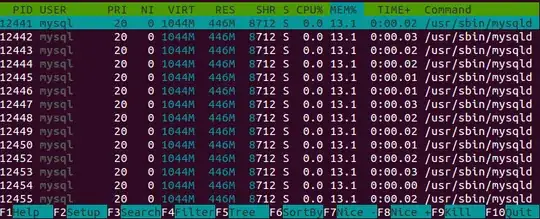
running htop and clicking on memory usage..
enter image description here

It is taking 33% of 4gb memory.

I just want to end the mysqld process.. running sudo pkill mysqld ends the process but again the process starts.. I want to completely end it and get the memory back.

αғsнιη
  • 36,350

7 Answers7

20
/etc/init.d/mysql stop
service mysql stop
killall -KILL mysql mysqld_safe mysqld

When you see the following information, you success

mysql: no process found
mysqld_safe: no process found
mysqld: no process found

I use this to solve the installation problem of MySQL 5.6 in Ubuntu 15.10 using this link.

During this installation, I encounter the problem saying:

mysqld_safe A mysqld process already exists

Just completely stop the mysqld, mysqld_safe, mysql solves the problem

dufte
  • 14,198
  • 5
  • 41
  • 43
Charlie
  • 201
16

The mysql Upstart configuration has the respawn option:

$ grep respawn /etc/init/mysql.conf
respawn
respawn limit 2 5
        elif echo $statusnow | grep -q 'respawn/' ; then

The respawn option tells Upstart to restart the process if it exits or is killed. The limit is 2, so you can try killing of the processes twice, which will tell Upstart not to start them again, or use:

sudo service mysql stop
muru
  • 207,228
5

Run sudo /etc/init.d/mysql stop

mschuetz
  • 61
  • 1
2

If you cannot find mysql within /etc/init or /etc/init.d, check that id did not come together with another package. As for me, i found out that my mysqld runs to support nextcloud, i did

$> find '/etc' | grep 'mysql'

/etc/systemd/system/multi-user.target.wants/snap.nextcloud.mysql.service
/etc/systemd/system/snap.nextcloud.mysql.service
/etc/apparmor.d/abstractions/mys
1

Somehow all the answers couldn't help me until I first restarted the server then stopped it, so here are the steps:

sudo /etc/init.d/mysql restart

sudo /etc/init.d/mysql stop

This worked in Ubuntu WSL.

0

If you are stuck in a running commang inside the console, you can try one of the following.

  • Ctrl + c
  • Ctrl + q
  • F10
  • type "exit" + Enter
  • Esc
0

System Preferences -> MySql -> Stop MySQL Server

This is the only one that worked for me, stopping / killing it from the command line would always let it restart.

Ioanna
  • 101