Tevir
| Tevir | |||||||
|---|---|---|---|---|---|---|---|
| |||||||
| cantillation | |||||||
| Sof passuk | ׃ | Paseq | ׀ | ||||
| Etnakhta/atnakh | ֑ | Segol | ֒ | ||||
| Shalshelet | ֓ | Zakef katan | ֔ | ||||
| Zakef gadol | ֕ | Tifcha/tarkha | ֖ | ||||
| Rivia | ֗ | Zarka | ֘ | ||||
| Pashta | ֙ | Yetiv | ֚ | ||||
| ֛ | Geresh | ֜ | |||||
| Geresh muqdam | ֝ | Gershayim | ֞ | ||||
| Karne parah | ֟ | Telisha gedola/talsha | ֠ | ||||
| Pazer | ֡ | Atnah hafukh | ֢ | ||||
| Munakh/shofar holekh | ֣ | Mahpach | ֤ | ||||
| Merkha/ma’arikh | ֥ | Mercha kefula | ֦ | ||||
| Darga | ֧ | Qadma | ֨ | ||||
| Telisha qetana/tarsa | ֩ | Yerah ben yomo | ֪ | ||||
| Ole | ֫ | Illuy | ֬ | ||||
| Dehi | ֭ | Tsinnorit | ֮ | ||||
Tevir (Hebrew: תְּבִיר, with variant English spellings including T'vir and Tebir) is a cantillation mark commonly found in the Torah, Haftarah, and other Hebrew biblical books. It can be found independently[1] or it can follow any number of other cantillation marks, very commonly a Mercha or Darga.[2]
The Hebrew word תְּבִיר translates into English as broken.
Total occurrences
| Book | Number of appearances |
|---|---|
| Torah | 2678[3] |
| Genesis | 623[3] |
| Exodus | 585[3] |
| Leviticus | 417[3] |
| Numbers | 576[3] |
| Deuteronomy | 477[3] |
| Nevi'im | 1837[4] |
| Ketuvim | 1329[4] |
Melody
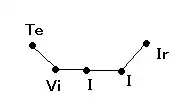
The Tevir is sung on a low tone, going downward at the beginning and upward at the end.
References
- ^ A Hebrew grammar: containing a copious and systematic development of the ... By Samuel Ransom, page 207
- ^ Chanting the Hebrew Bible By Joshua R. Jacobson, page 113
- ^ a b c d e f Concordance of the Hebrew accents in the Hebrew Bible: Concordance ..., Volume 1 By James D. Price, page 6
- ^ a b Concordance of the Hebrew accents in the Hebrew Bible: Concordance ..., Volume 1 By James D. Price, page 5